Would you like to make better use of your time?

All the hosts on The Morning Thing yell – YES! If your schedule is like our schedules, you could use help finding balance for your daily schedule.

Marcy found this insightful article from Crosswalk. They share 6 ways to make better use of your time. These tips can become daily habits that will help us find the balance that so desperately needs.
Check out the FULL article HERE from author Vivian Bricker.
We are including some highlights below.

1. Take Time to Read the Bible. The Bible contains everything we need to know in order to live holy and godly lives (2 Peter 1:32 Timothy 3:16-17). By taking time to read the Bible, we will automatically be making better use of our time. Even if we only spend 15-20 minutes in the Bible, we are practicing using our time wisely. 

2. Be Active in Prayer. Prayer is our direct line to God. Whenever we pray, we can rest in the sure knowledge that God hears our prayers. The Apostle John tells us, “This is the confidence we have in approaching God: that if we ask anything according to his will, he hears us” (1 John 5:14). With this promise in our hearts, we need to be going to Him everyday in prayer. 

3. Steer Clear of Distractions. There are many distractions in our lives, such as social media, endless text messages, or nonstop scrolling on the Internet. All of these things need to be put aside. They are a waste of time and impact our lives negatively.

4. Prioritize Your Physical, Mental, and Spiritual Health. By taking time to feed into our wellbeing each day, it will help our lives to become more happier and healthier. 

5. Practice Saying “No”. Practicing saying “no” will be difficult, yet it is something that must be done. We don’t need to overwhelm ourselves or stretch ourselves too thin. By saying “no” to things that we don’t need or can’t handle, it will help us make better use of our time.

6. Start a Routine. Starting a routine can help us organize our time better and use it more wisely. By having a routine and sticking with it, our days will become much more predictable and controlled. Rather than doing things on the spur of the moment, we will start outlining time in our day to do specific tasks. This will help us to have more control over our day and feel more organized. 

Author Vivian Bricker loves Jesus, studying the Word of God, and helping others in their walk with Christ. She has earned a Bachelor of Arts and Master’s degree in Christian Ministry with a deep academic emphasis in theology. Her favorite things to do are spending time with her family and friends, reading, and spending time outside. When she is not writing, she is embarking on other adventures.

https://www.crosswalk.com/slideshows/ways-to-make-better-use-of-your-time.html

Summer Time Fun!

Summer is finally here, and we couldn’t be more excited! With great weather and more free time, we’re always looking for something to do! That’s why today on The Morning Thing we took a look at 15 Fun and (mostly) Free Things to do with the whole family this summer!

Click HERE to read the full article!

Whether you want to cool off at a splash pad, explore a new nature trail or discover a new story, there’s something here for everyone!

You’ll find activities like…

  1. Visiting a botanical garden…
  2. Roaming through a zoo…
  3. Stepping inside a factory…

And so much more!

Make sure to listen to The Morning Thing weekdays 6-9am for more fun and encouragement on 90.9fm WNZR!

Facing self-doubt? Here’s some ways to battle it!

We’ve all faced it one time or another. Those creeping thoughts of self-doubt telling us we aren’t good enough and can’t accomplish what we hope to. Today on The Morning Thing we looked at ’13 Things to Remember When You Think You’re Not Good Enough’ from The Positivity Blog and talked about the different ways these tips can be applied to our own lives.

Click HERE to check out the full article!

When facing those overwhelming thoughts and emotions that come with self-doubt, try and remember:

  1. You don’t have listen to your inner critic (you can shut it down)
  2. Find the exception to open up your mind again
  3. Make a list and then take a few minutes to soak in your positive memories
  4. Stop getting stuck in the comparison trap
  5. What people share online is usually a high-light reel
  6. You may not want to check social media more than once a day
  7. You can always start small with a right thing string to change how you feel
  8. Celebrate all wins
  9. It really helps to let it out
  10. Don’t beat yourself up. There are much better ways to motivate yourself

You can catch great encouragement like this and more fun on The Morning Thing, weekdays 6-9am on 90.9fm, WNZR!

Struggling with being a People Pleaser?

Have you ever struggled with feeling the stress and anxiety of trying to please everyone around you? You definitely aren’t alone. Today on The Morning Thing, we shared 7 powerful tips from the Positivity Blog that can help you stop this unhealthy habit and replace it with a more positive, confident mindset!

Click HERE to read the full article

  1. Realize that with some people it isn’t about you and what you do (no matter what you do)
  2. Learn how to say no
  3. Reminder: People don’t really care that much about what you say or do
  4. Learn how to handle criticism and verbal lash outs (and the fear of that)
  5. Set boundaries for yourself
  6. Strengthen your self-esteem
  7. Keep your focus on what YOU want out of your life

How is the conversation at your dinner table?

The Morning Thing talked about communication on today’s show.
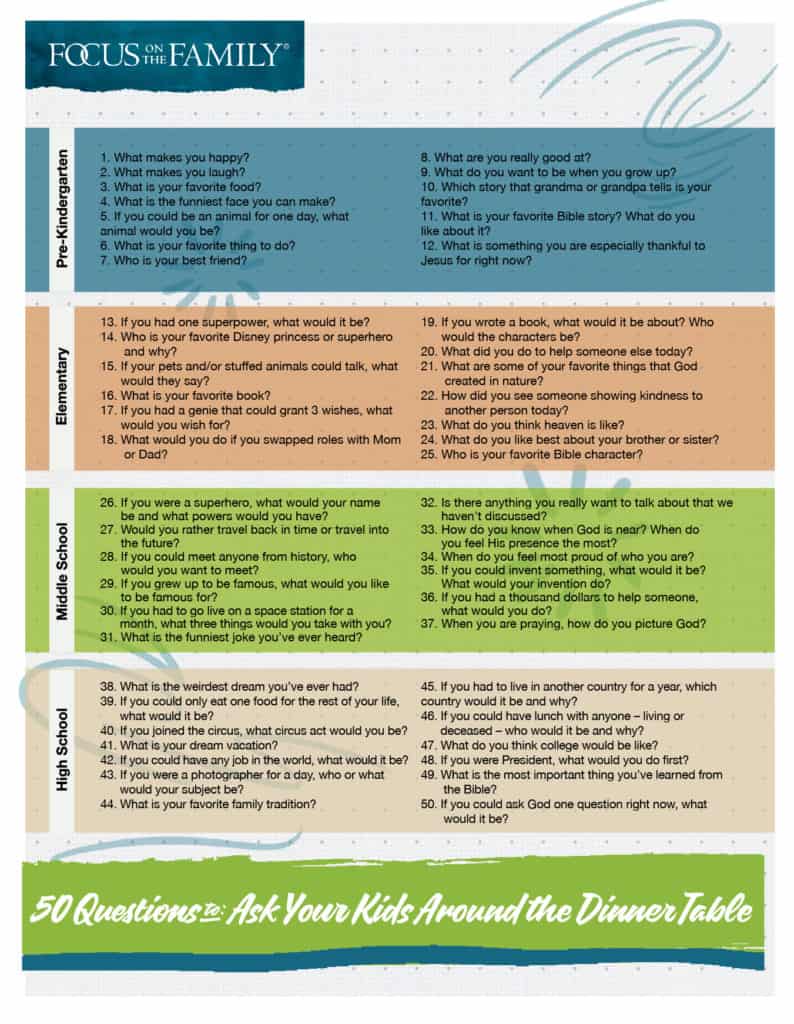
We want to help you spark conversations and connections at your dinner table.

Focus on the Family has created a list of 50 questions to ask your kids at dinner. These questions can help establish a foundation of trust and love to help your kids grow. Click HERE to read the full article.
Check out the list below. The questions are divided up into age groups! Try a few tonight and see what happens.

How is your mental health today?

Did you know that May is Mental Health Awareness Month? Today, the Morning Thing shared some insight from Crosswalk.com– 10 ways that we can improve our mental health.

Click HERE to read the full article

  1. Pray
  2. Journal
  3. Lean on your community
  4. Eat well
  5. Read your bible
  6. Practice gratitude
  7. Exercise reguarly
  8. Practice your spiritual gifts
  9. Rest
  10. See a Doctor

Wherever you are today, please remember that God loves you (John 3:16) and has a plan for your life.

    The Morning Thing kicks off Mom’s Week!

    This will be a special week on The Morning Thing. Today, we kicked off Mom’s Week – a week to honor and encourage Moms at all stages of life.

    Today, we shared 5 ways to be a mentally strong Mom. Click HERE to see the full article from imom.com

    1. Empower yourself.
    To be a better mom and mentally strong in trying times, revise your default phrases. When you’re stressed or challenged, try these instead: I’ll rise above this. I won’t let this bother me. I’m human. I’m gonna do the best I can.

    2. Be content with who you are.
    Comparing ourselves to others in person or on Instagram steals our joy. Self-worth is built on contentment with who you are. If you want to be a better mom, start with identifying your own wonderful qualities instead of comparing yourself to others. Are you a good listener? Are you crafty and creative? Are you the best at making your kids laugh.

    3. Let your mind wander.
    Instead of scrolling your phone when you have downtime, try turning inward. Think about your experiences and look for solutions to your problems. Building mental strength takes effort. Sometimes that means facing the hard or challenging thoughts we’d rather choose to avoid. But the payoff comes with being a more thoughtful mom.

    4. Be on the lookout for progress.
    In this moment in your life, you may feel frustrated with your child. But instead of holding her to standards you’ve read about or seen in your friend’s child, shift your focus to small, measurable goals. You’ll not only be a better mom, but you’ll build mental strength because you’re feeling hopeful rather than defeated.

    5. Lay your head down more.
    Getting more sleep will help you be mentally strong on those days when your kid refuses to get dressed or your teenager blames you for not waking him up for school. When you’re sleep deprived, you’re much more likely to lose your cool. Stixrud and Johnson say, “[S]leep deprivation decreases your flexibility, weakens your ability to see things in context, and impairs your judgment.” Getting a good night’s sleep can help deliver the patience we need in a heated moment.

    imom.com also has 7 quick prayers of encouragement for moms. Print this one off! 🙂

    Want to know how to relieve your stress? Check out our MT Blog!

    Today, The Morning Thing celebrated Stress Awareness Month by sharing simple ways that you can relieve your stress.

    Take a moment and look through this great advice from healthline.com

    Click HERE to read the full article!

    1. Get more physical activity 

    If you’re stressed, moving your body consistently may help reduce stress levels and improve mood.
    If you’re currently inactive, start with gentle activities such as walking or biking. Choosing an activity that you enjoy may help increase your chances of sticking to it in the long term.

    2. Eat a balanced diet 

    Your diet affects every aspect of your health, including your mental health.

    Minimizing your intake of highly processed foods and beverages and eating more whole foods can help ensure your body is properly nourished. In turn, this may improve your resilience to stress. Whole food options can include:

    • vegetables
    • fruits
    • beans
    • fish
    • nuts
    • seeds

    3. Minimize phone use and screen time  

    While smartphones, computers, and tablets are often necessary, using them too often may increase stress levels.

    Spending too much time in front of screens is associated with lower psychological well-being and increased stress levels in adults and kids.

    Furthermore, screen time may negatively affect sleep, which may also leadTrusted Source to increased stress levels.

    4. Practice self-care

    Setting aside time to practice self-care may help reduceTrusted Source your stress levels. Practical examples include:

    5. Try journaling

    Journaling may help reduceTrusted Source stress and anxiety and provide a positive outlet for your thoughts and emotions.

    You can also try a guided journal if you’d prefer more targeted, expressive writing.

    6. Reduce your caffeine intake

    Caffeine is a chemical in coffee, tea, chocolate, and energy drinks that stimulates your central nervous system.

    Although coffee has health benefits in moderation, it’s recommended to keep caffeine intake under 400 mg  daily, which equals 4–5 cups (0.9–1.2 L) of coffee.

    Still, people sensitive to caffeine may experience increased anxiety and stress after consuming less caffeine than this, so it’s important to consider your tolerance.

    7. Spend time with friends and family

    Social support from friends and family may help you get through stressful times and cope with stress.

    Having a social support system is important for your overall mental health. If you’re feeling alone and don’t have friends or family to depend on, social support groups may help. Consider joining a club or sports team or volunteering for a cause that’s important to you.

    8. Create boundaries and learn to say no

    Not all stressors are within your control, but some are. Putting too much on your plate may increase your stress load and limit the amount of time you can spend on self-care.

    One way to help reduce stress and protect your mental health may be to say “no” more often. This is especially true if you take on more than you can handle because juggling many responsibilities may leave you feeling overwhelmed.

    Being selective about what you take on — and saying “no” to things that will unnecessarily add to your load — can reduce your stress levels.

    9. Avoid procrastination

    Another way to take control of your stress is to stay on top of your priorities and avoid procrastinating when you aren’t feeling stressed.

    Procrastination may harm your productivity and leave you scrambling to catch up. This can cause stress, which negatively affects your health and sleep quality. It’s also true that you may be more likely to procrastinate in times of stress as a coping mechanism.

    If you find yourself procrastinating regularly, it may be helpful to make a to-do list organized by priority. Give yourself realistic deadlines and work your way down the list. Sometimes, adding an item to the list may help you feel better about it, even if it doesn’t get done immediately.

    Work on the things that need to get done today and give yourself chunks of uninterrupted time. Switching between tasks or multitasking can be stressful.

    10. Take a yoga class

    Yoga has become a popular method of stress relief and exercise among all age groups.

    While yoga styles differ, most share a common goal — to join your body and mind by increasing body and breath awareness.

    12. Cuddle

    Human touch may have a calming effect and help you better cope with stress. These types of contact may help  release oxytocin and lower cortisol. In turn, these effects help lower blood pressure and heart rate. Both high blood pressure and increased heart rate are physical symptoms of stress.

    13. Spend time in nature

    Spending more time outside may help reduce stress.

    Studies show that spending time in green spaces such as parks and forests and being immersed in nature are healthy ways to manage stress.

    Hiking and camping are great options, but some people don’t enjoy — or have access to — these activities. Even in an urban area, you can seek out green spaces such as local parks, arboretums, and botanical gardens.

    14. Practice deep breathing

    Mental stress activates your sympathetic nervous system, sending your body into fight-or-flight mode.

    During this reaction, stress hormones trigger physical symptoms such as a faster heartbeat, quicker breathing, and constricted blood vessels.

    Deep breathing exercises include:

    Deep breathing aims to focus your awareness on your breath, making it slower and deeper. When you breathe in deeply through your nose, your lungs fully expand, and your belly rises. This helps slow your heart rate, allowing you to feel at peace.

    15. Spend time with a pet

    When you cuddle or touch your pet, your body releases oxytocin — a hormone linked to a positive mood.

    Having a pet may also help relieve stress by giving you purpose, keeping you active, and providing companionship.

    16. Consider supplements

    Several vitamins and minerals play an important role in your body’s stress response and mood regulation. As such, a deficiency in one or more nutrients may affect your mental health and ability to cope with stress.

    Some studies show that certain dietary supplements may help reduce stress and improve mood.

    For example, your magnesium levels may deplete when you’re chronically stressed.

    Other supplements, including Rhodiola, ashwagandha, B vitamins, and L-theanine, may also help reduce stress, though more research is needed to understand their potential benefits better.

    However, dietary supplements may not be appropriate or safe for everyone. Consult a healthcare professional if you’re interested in using supplements to help relieve stress.

    The bottom line

    Although stress is unavoidable, being chronically stressed takes a toll on your physical and mental health.

    Fortunately, several evidence-based strategies can help you reduce stress and improve your overall psychological well-being.

    Exercise, mindfulness, spending time with a pet, minimizing screen time, and getting outside more often are all effective methods.

    MVNU Women’s Auxiliary welcomes Sheila Walsh to the 2024 Conference

    Shelia Walsh will be the speaker featured at the MVNU Women’s Auxiliary Spring Conference.
    She is an accomplished author, Bible Teacher, and Television host.

    WNZR’s Alyssa Sidle had the chance to chat with Sheila Walsh.
    She shared an update of what she’s been up to in 2024. She also shares about her new book, ‘Holding On When You Want To Let Go’.
    Click HERE to hear the full conversation.

    Shelia speaks about finding balance in the midst of everything she’s a part of, including speaking, writing and hosting numerous TV shows for TBN. She says that it’s important to remember that being busy doesn’t necessarily mean being productive, and that you have to focus on taking sabbath.

    Shelia gives a small preview of what to expect at the conference this weekend.

    Shelia talks about how we can pray for her and her husband Barry and their ministry.

    Tickets are still available for this weekend’s conference.
    Tickets can be purchased at the door for this event.
    Two day tickets are $45 and one day tickets are $25.

    Conference Schedule:
    Friday, March 15
    5:30-7:00 p.m.   Registration
    7:00-9:00 p.m.   Friday Session

    Saturday, March 16
    8:00-9:00 a.m.    Registration
    9:00 a.m.-noon   Saturday Sessions

    Click HERE for more information on MVNU Women’s Auxiliary. You can become a member this weekend!

    Blog at WordPress.com.

    Up ↑