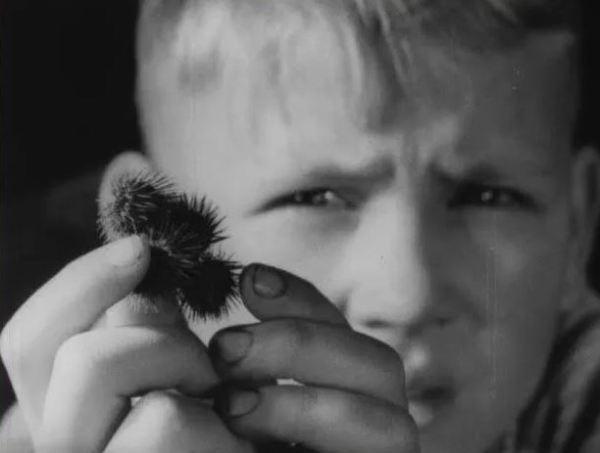
There’s something special about seeing your hometown on screen—especially when that footage dates back more than 80 years. That’s exactly what’s happening as Small Town USA, a restored film series, returns to the Knox Memorial Theater.
WNZR’s Eric Brown recently sat down with author and historian Michael Sherfy to talk about the origins and significance of these fascinating films.
Click HERE to hear the full conversation!
Sherfy explains that the project dates back to 1944, right in the middle of World War II. At the time, the U.S. government created these films as part of a “good neighbor” effort aimed at Latin America. The goal? Strengthen relationships and encourage support for the Allied cause. The films eventually reached far beyond that audience, translated into 17 languages and shown in 33 countries.
So why Mount Vernon? According to Sherfy, it checked all the right boxes. Filmmakers were searching for what they considered a “typical” American town, and Mount Vernon offered just that—a balanced mix of agriculture and industry, a thriving community, and a picturesque setting. From its inviting public square to its neighborhoods and local businesses, the city helped paint an idealized version of small-town American life.
One of the most unique aspects of the films is their authenticity. There were no professional actors involved. Instead, real Mount Vernon residents stepped in front of the camera, giving the films a natural and relatable feel. For audiences at the time—and especially for locals now—that authenticity adds an extra layer of connection.
The scope of what was captured is equally impressive. Filmmaker Julien Bryan shot more than 100,000 feet of film, though only a small portion made it into the final cuts. What remains offers a vivid snapshot of daily life in the 1940s. Viewers will see workers at Cooper-Bessemer, a doctor making house calls and administering vaccinations, scenes from Election Day, classrooms in action, and even agricultural work through the lens of a county extension agent. Together, these moments create a rich portrait of community, work, and everyday life.
Of course, Sherfy is quick to point out that these films weren’t just documentaries—they were patriotic propaganda. Initially created to promote America during World War II, they were later repurposed during the early Cold War to highlight the American way of life. Even so, they remain a valuable historical record, offering insight into both reality and aspiration in 1940s America.
Modern viewers may notice a bit of 1940s “hokiness,” but they’ll also likely recognize familiar streets and settings. That blend of past and present is part of what makes this screening so compelling.
The April 8th event promises more than just a film showing. It will include an introduction from Mayor Matt Starr, historical context to help frame the experience, screenings of three of the five restored films, and a panel discussion with audience interaction. It’s not just about watching history—it’s about engaging with it.
Small Town USA will be shown Wednesday, April 8th at 6:30 p.m. at the Knox Memorial Theater.
For more information, contact the Public Library of Mount Vernon and Knox County at (740) 392-2665 or click HERE.
 Rise and Shine