What’s for breakfast?

February 27th is Big Breakfast Day! It was established on this day in 2020 to encourage us to slow down and eat a good breakfast with friends and loved ones. After all, breakfast is the most important meal of the day.

This morning on The Morning Thing, Allison and Josiah found some fun, over the top breakfast ideas that you can try with your family.

Allison shared recipes for breakfast brownies, breakfast fondue, and bacon, egg and cheese tacos.

Josiah shared recipes for an air fryer breakfast bake, low carb breakfast meatballs, and spicy homemade hash browns.

Click HERE to see the full list of fun breakfast recipes.

The Morning Thing celebrates National Family Day with some ways you can strengthen your family

Today in Canada, they will celebrate Family Day. This day was established with the purpose of bringing relatives together, strengthening family ties and celebrating the importance of family. 
Click HERE to read more about the history of this special day and find some ways that you can celebrate (from Days of the Year).

The Morning Thing decided that since the USA was celebrating a holiday today (President’s Day), it would be a good day to focus on the family. They shared 5 ways to strengthen your family. We hope you try an idea today, while most families have the day off.

Click HERE to see the list created by the Department of Homeland Security.

  • Work on good communication skills. Focus on listening and understanding what your family member is trying to say. Carve out time to work on communication skills by putting away phones and other devices at the dinner table so you can interact with each other.
  • Establish traditions, values, and goals together. If you have already developed some family traditions, do your best to continue what you started. Sit down to discuss and reinforce values, invent new traditions, and plan how you will accomplish goals together.
  • Try new things together. Play a new board game, discover a new craft, or try different foods. Choose a night each week for movies and games. If you have children, let them help make decisions about new things to try.
  • Connect with distant family members. Make time to connect with long distance family members by phone, email, or video calls. Staying in touch with people outside of your home will help you feel more connected to them.
  • Stay active. Physical activity can help reduce stress. Have a family dance party or set family exercise goals, schedule weekly walks together, or create competitions to see how many pushups or jumping jacks each of you can do. These activities can create moments of bonding.
  • Laugh together. Find things to do that will make you laugh. Choose a funny movie to watch together, read a favorite book, or tell each other jokes.

The Morning Thing shares ways to make Valentine’s Day sweet for your family

Valentine’s Day is next Wednesday! YES – 1 week away!
Today, The Morning Thing shared some fun ideas on how to make this day extra special for your family.

Thanks to imom.com for their wonderful and creative ideas!
Let us know if you try any of the ideas. We would love to share your family’s story!

Are you saving money? Need some help?

This is Talk Money Week!
The hope behind this week is that more people will start talking about money. If people can share their financial problems, then they should find it a lot easier to deal with and manage their money.
Click HERE to find out more about this special week.

Today, The Morning Thing shared 13 money saving tips from Crown Financial Ministries.
They are a great program partner of WNZR. You can hear their program “My MoneyLife” each weekday at 3:50pm on WNZR.
Click HERE to connect with Crown for biblical financial resources.

Click HERE to read the FULL article with these money saving tips.

1. Act Like You Receive 24 Paychecks a Year Instead of 26

If you are paid biweekly, you actually receive 26 paychecks a year instead of 24. Instead of budgeting based on those 26 paychecks, budget based off getting paid twice a month – 24 times – instead.  

2. Compete With Yourself

Sometimes you can be your best source of motivation! Challenge yourself (or your spouse or a friend) to spend $3 less per meal every time you go out to eat.

3. Set Up Automatic Transfer

Automating a certain amount to go straight from your paycheck to your savings account will help you reach your goals quickly. If you can’t see the money to spend in the first place, then you won’t be tempted to spend it!

4. Adjust Your Tax Withholdings

Adjust your withholdings so you have that extra money in your account every month. However, you will need to plan in case you owe the government money come Tax Day!

5. Always Check For Coupons and Rebates

Apps and browser extensions make it easy to shop with coupons and earn money back from rebates. Download apps like RetailMeNot, and Ibotta. Install extensions like Honey so you never miss a deal when online shopping.

6. Plan Ahead and Never Go Shopping Without a List

A lack of planning is a major spending trap. Before you go shopping anywhere – the grocery store, Walmart, the mall – make a list. Then stick to it!

7. Ask For Discounts

It may be uncomfortable if you’re not a natural bargainer, but it’s always worth it to ask for a discount. Try this especially with your cable and internet provider once a year. Ask about loyalty discounts, sales, or other offers they have going on.

8. Find a Buddy

Ask your friends to share when they find good sales. Ask around for the best prices.

9. Do Your Research

Before you purchase a big item, spend time researching to see if you can find a better deal. If you find a better price non-locally, ask for a price match. A few minutes online can save you lots!

10. Start Christmas Shopping Early

One of the Crown staff members has most of her Christmas shopping done by September. She finds and purchases gifts for members of her family throughout the year when she finds a good sale. By doing so, she avoids the stress and markups of the Christmas season and can actually relax and enjoy the holidays!

11. Set Goals

Goals will motivate you to keep saving. Proverbs 29:18 says, Where there is no vision, the people perish. If you don’t have a vision for your savings, you won’t make any progress. Decide on a realistic amount of money to have saved by a certain date and then align your budget to reach that goal.

Every time you reach a goal, celebrate, make another, and keep going. You should always have short-term and long-term goals!

12. Save Every $5

If you use cash for all of or some of your budgeting categories, commit to saving every $5 bill you touch. Proverbs 21:5 says, Steady plodding brings prosperity. Start plodding!

13. Drink Only Water

Switching to only water can save you hundreds, if not thousands, of dollars a year. A latte out costs around $5. A soft drink or tea at a restaurant costs around $2. If you have one coffee and one tea or soda out every day, by switching to water, you’ll save around $2,550 a year. And it’s significantly better for your health!

Crown also recommends that you start by saving $1,000 in an emergency fund. 
Once you have $1,000 in an emergency savings account, work your way up to 12 months’ of living expenses. The Money Map can help you set and track financial goals like these. Download it for free here!


Let’s Cultivate Gratitude!

It can be a difficult thing to do, but its not necessarily about trying to stay positive all the time. Instead, its more about trying to pull the good from the situations and circumstances of every day life. If we do this, we can find that there is a lot in life to be thankful for! God calls for us to count our blessings, so lets try and find some good to be thankful for. How can we do this? Well, our cohosts found a few great ways to get started in your journey of cultivating a gratitude practice!

Here are a few examples of how to practice gratitude!

KEEP A GRATITUDE JOURNAL.

Studies show that keeping a gratitude journal can have positive psychological and physiological effects. There are a variety of ways to build this practice, including:

  • Try the “three good things” exercise where you keep a daily record of three good things for which you are grateful.
  • Start a “G.L.A.D.” practice. G.L.A.D. is an acronym for Gratitude, Learned, Accomplished, Delight. It’s about finding joy and balance by paying attention to certain aspects of daily life that frequently go unnoticed.

WRITE THANK-YOU NOTES.

Make your gratitude practice social by writing and sending thank you letters to someone who has done something for you. (Note: emails and even texts count.) Studies show that this act can strengthen relationships, help people to appreciate what they’ve received in life, and feel like they’ve given something back to those who have helped them.

Click HERE for the full list from the John Hopkins University blog.

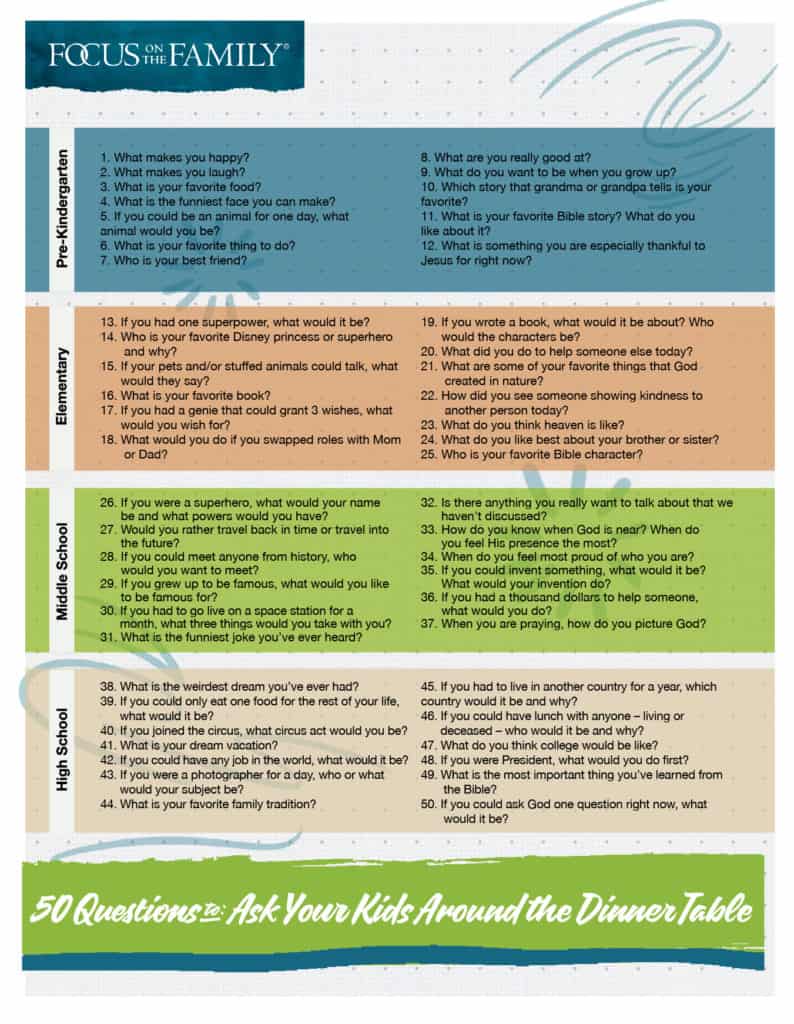
Making the most of mealtime with your family

Did you know that families who eat a meal together are happier and healthier? Perdue University’s Extension Nutrition Education Program encourages families to make mealtime family time as you cook, eat, and talk together! This can build your family’s relationship, promote healthy eating, foster your children’s sense of family stability, save money, develop everyone’s cooking skills, help your children develop important social skills, and even let everyone try new foods.

Click HERE to learn more from Perdue University Extention Nutrition Program.

Need some cheap and easy dinner ideas for your family? We shared some recipes from Country Living. They include pictures of every recipe so you can see what amazing food you can make You may even have some of these ingredients in your pantry now so you could even try one tonight!

Click HERE for 68 cheap dinner ideas for families from Country Living.

Tips and tricks for organizing your family’s schedule, and some advice from local moms!

School is back in session, and the kids are getting back into their after-school activities. Does it seem overwhelming to keep track of? We talked to 3 moms to get some real-life advice on organizing your family’s schedule. Lindsay Robinson, Amanda Smith, and Soni Douglas share their experiences.

We also shared 7 tips from Very Well Family for creating those family calendars. Some advice they gave included:

Make sure the calendar is updated and accurate.

Try a digital calendar. Make sure the app works for your family and your needs!

Use a physical calandar, and keep it where it’s accessible to everyone in the family. Use color coding if that’s helpful for your family. You can also blend these two and write your schedule in both your calendar app and your physical calendar so your phone can send you reminders.

Get everyone in the family involved, even the little ones! Teach them the importance of keeping a schedule so they can use it effectively when they get old enough to use the calendar.

Check-in with your family regularly about their schedule. Talk about what they need to do the next day, and what they need to plan in the future.

Don’t forget to plan for time to rest and relax. Having a jam-packed schedule once in a while happens, but it shouldn’t be every day. Studies show that people who don’t take time to rest are at risk for depression, anxiety, lack of sleep, eating less/poorly, and poor decision making skills. Make time for your family to spend time together, or for you and your significant other to have a date night.

Click HERE to read the full article from VeryWell Family.

It’s Back to School Week on The Morning Thing!

We know many students in our area are getting ready to go back to school, and many students are going back this week. We want to help you and your child have a smooth transition as they head into the school year!

This morning on The Morning Thing, we shared some relaxing things you can do before the semester starts. Click HERE to see the full list. We especially loved the idea of taking a hike (and the weather forecast looks promising for a hike this week!), cleaning out your closet, and going berry picking. Take some time for both you and your student to unwind before the school year starts.

Is your child feeling anxious for the school year? Sometimes starting new things can make children nervous. If they are, here’s 5 tips from Johns Hopkins Children’s Center:

  • A week or two before school, start preparing children for the upcoming transition by resuming school-year routines, such as setting a realistic bedtime and selecting tomorrow’s clothes.
  • Arrange play dates with one or more familiar peers before school starts. Research shows that the presence of a familiar peer during school transitions can improve children’s academic and emotional adjustment.
  • Visit the school before the school year begins, rehearse the drop-off and spend time on the playground or inside the classroom if the building is open. Have your child practice walking into class while you wait outside or down the hall.
  • Come up with a prize or a rewarding activity that the child could earn for separating from mom or dad to attend school.
  • Validate the child’s worry by acknowledging that, like any new activity, starting school can be hard but soon becomes easy and fun.

Click HERE to learn more about easing your child’s anxiety.

Getting your home organized while doing some spring cleaning!

It’s spring, which means you’ve probably started doing your spring cleaning. You can get your home really organized while you clean too! Women’s Day offers 32 tips for you to get your home organized and tidy! Some of these tips include focusing on one area, setting aside time to clean and organize, take inventory of what you have, donate what you have but don’t need or use, find a place for everything, store things where you will find it easily, use your walls to organize, and much more!

Click HERE to see all 32 tips from Women’s Day.

It’s National Pet Day! Let’s talk about the power of our pets!

April 11 is National Pet Day. On this day, we celebrate the pets that bring joy to our lives. Whether you have dogs, cats, fish, birds, hamsters, or horses, National Pet Day is a great day to give them a little extra love.

This holiday started in 2006 when Colleen Page, an animal welfare advocate, decided to create a day to celebrate all pets. She also wanted this day to create awareness for animals in shelters awaiting their forever homes.

There are many ways to participate in National Pets Day. You can adopt a pet from an animal shelter, volunteer at a shelter and help take care of the animals, or even donate a few toys or some food for the shelter animals. If you have pets, spend a little extra time with them, give them a new toy, take some pictures of them and share them on social media, and give them some treats! Whether you have your own pet or not, today is a day that anyone can get involved in!

Click HERE to read more about National Pet Day.

Did you know that pets can bring some health benefits? It’s true! Research has found that hanging out with some animals can decrease levels of cortisol, which lowers stress and blood pressure. They can also help with feelings of loneliness and help you feel more socially fulfilled.

Click HERE to learn about all of the amazing positive health effects of having a pet.

Blog at WordPress.com.

Up ↑