It is National Plan for Vacation Day. Did you know that vacations are good for your health?

National-Plan-for-Vacation-Day-Last-Tuesday-in-January-1

The last Tuesday in January is National Plan for Vacation Day. This day reminds us to plan our vacation at the start of the year for the rest of the year. The early bird gets to pack their bags and fly away to a little fun and relaxation!

This day also reminds us to actually TAKE that vacation. Each year, Americans leave more than 600 million vacation days unused. A survey conducted by Skift said that nearly 42 percent of Americans do not take any vacation days. (The Glassdoor-Harris Interactive survey also showed that 61 percent of work while on vacation.)

So…start the planning process today!

Here are three easy steps from www.nationaldaycalendar.com to make it happen:

  1. Determine how much time off you earn.Look up the number of vacation days you earn by checking with your finance or HR team. Don’t forget to make a note of any office closures.
  2. Coordinate calendars.Use Project: Time Off’s vacation planning tool to plot out your year—enter the number of days you earn, put your vacation dreams on the calendar, and use your custom link to get your family and friends involved in the planning.
  3. Share your plans.Once you have your days determined, use the calendar to export your plans to Outlook, Gmail, or other electronic calendars to share with your boss, co-workers, and family.

Did you know taking a vacation is good for your health?

Taking vacations can:
Reduce Stress
Help Your Heart Stay Healthy
Improve Your Mental Health 
Improve Your Relationships

Click HERE to read the entire article about vacation health benefits from Jill L. Ferguson, founder of Women’s Wellness Weekends.

Sleep – How much do you need? Why is it so important?

The Morning Thing focused on the topic of sleep on today’s show.
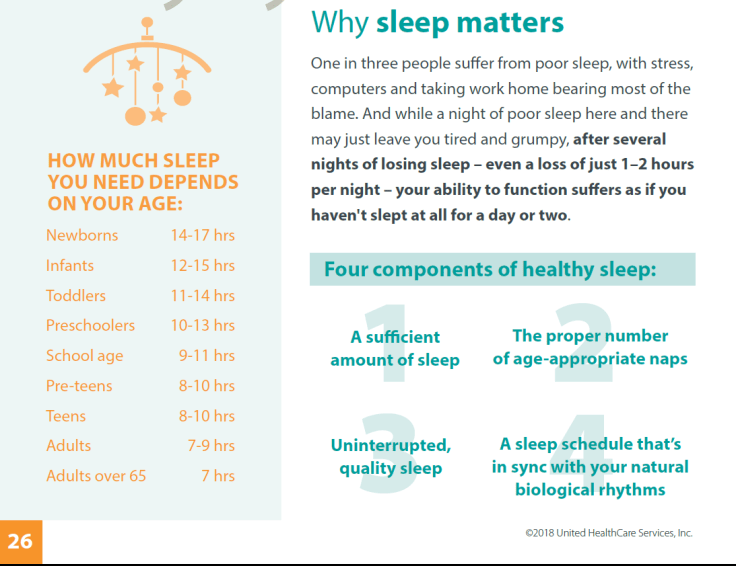
We shared many interesting facts – the number of hours you need each night, 10 benefits of sleep and the Nitty Gritty on Naps. Check out this insightful information from United Healthcare Services.

How much sleep you need

Naps and benefits of sleep

sleep myths and facts and apps

sleep solutions

What’s for Dinner? The Morning Thing helps you answer this dreaded question.

Do you ever stress about the answer to this question – “What’s for Dinner”?
The Morning Thing shared some easy everyday tips for meal planning (from United HealthCare Services). Plus, we shared tips on how you can use the freezer to stretch your groceries and save money.

Everyday tips for easier meal planning

We also shared great meal makeovers! Check out these yummy ways that you can use those leftovers to make a new meal!
(From www.allrecipes.com)

Baked Potato Soup
Baked Potato Soup

Chicken Enchiladas

Chicken Enchiladas

Rice A Roni Salad

Rice-A-Roni Salad

Cheesy Spaghetti Frittata

Meet the Team – Crunch Out Obesity in Knox County

Crunch Logo_0

This week’s Meet the Team feature shines the spotlight on “Crunch Out Obesity in Knox County”. Daria Swisher of The Morning Thing talked with Lisa Rutter from United Way and Ashley Phillips from the Knox County Health Department about this successful program. Click HERE to hear their conversation.

For more information about Crunch Out Obesity, click HERE

For more information about getting healthy in Knox County, go to gethealthyknox.org

It is National Stress Awareness Day – how will you celebrate?

stress-awareness-day1-e1446375185640-808x380

What do we mean “celebrate” National Stress Awareness Day?! If we are honest, all of us deal with stress on some level. Stress Awareness Day was set aside as time to be aware of the stress in our lives and how it affects us.

History of Stress Awareness Day (from www.daysoftheyear.com)
Stress Awareness Day was established by the International Stress Management Association (ISMA) to help provide information on stress, and strategies on how to address it for both companies and individuals. The organization is focused on helping employers and employees help each other by providing comprehensive guides to establishing a program within their organization, and individuals by looking after their health and well-being on a day to day basis.

Stress Awareness Day is your opportunity to start looking after yourself and your life, and break down the individual stressors in your life. Failure to deal with stress in your life effectively can lead to serious health problems, including increased blood pressure, susceptibility to heart disease, and a decline in your immune system. Once you start experiencing these symptoms they can landslide into each other, resulting in growing sickness, and by extension, more stress. It’s truly a self-feeding problem, and a cycle that is necessary to control to enjoy our lives.

How to Celebrate Stress Awareness Day (from www.daysoftheyear.com)
The best way to celebrate Stress Awareness Day is to take the opportunity to remove the stress from your life for the day. Take the time to examine your life and find out where all the stressors lie, and start looking into taking steps to remove them or find ways to mitigate them. Removing stress from your life can start off as a stressful experience, so it can help to get the assistance from organizations like ISMA to look into strategies and support in how to manage those things in your life that cause stress.

Whatever you choose to do, take the time to take a day off and let yourself have a day of freedom. If it’s sickness, do something to help you focus on something other than that sickness. Stress can be a killer, don’t let it take one more day from your life, act now and start living a stress free life!

Today, The Morning Thing shared some ways to relieve stress from Focus on the Family.
Click HERE for the full article.
Here are some tips excerpted from Tools for Time Management by Edward R. Dayton.

  • Staying ahead of your work is a good way to relieve the pressure of schedules. By scheduling a completion time 10 percent to 20 percent ahead, you have the peace of knowing there’s time to recover if things go wrong.
  • Doing the hard things first, particularly if they have a great deal of emotional content, will relieve the subterranean emotions that tend to plague us in different situations.
  • Getting enough sleep is a must. Know how long you can get along with a reduced amount.
  • Do the difficult tasks in phases. Often a “first draft” will get you 80 percent of the way along. Time for “topping off” the finished product can be better foreseen, and meeting the deadline seems less of a task.
  • Have planned recreation and hobbies. I am a wood carver and a carpenter of sorts. Setting aside time for this activity helps me relax. Other people enjoy different methods of unwinding. One of my close friends has a way of announcing to his secretary when he will be finding some relief. If he says, “I’m going to inspect some real estate at 3 o’clock,” you can be sure that you’ll find him on the first tee at the golf course.
  • Admitting and verbalizing the causes for your own irritations (be they lack of sleep, overworking, too much stress or what have you) helps [keep] others from getting emotional with you and triggering unexpected explosions.
  • Facing up to the fact you really can’t do all the things you scheduled and that some of them need to be postponed is probably the best relief valve of all. This can be a humbling experience, but the rewards in personal well-being are great.

The Morning Thing celebrates Massage Therapy Awareness Week!

Today was a GOOD day! The Morning Thing celebrated Massage Therapy Awareness Week with Licensed Massage Therapist, Angi Davidson.
Angi works for Knox Community Hospital’s Center for Rehabilitation and Wellness. She stopped by our studio to talk about the benefits of massage…….and to give US chair massages! Yeah! Praise the Lord for Angi Davidson!

Do you know how helpful massage can be to your body? Check out this list of benefits of massage from the American Massage Therapy Association.

Benefits of Massage

Transition is tough, but you can positively face change. The Morning Thing 7/19/17

change

(picture courtesy of Rachel Yoder)

The Morning Thing focused on an interesting topic topic today – transition.
It is difficult to handle change, at the workplace and at home. Change is inevitable, but most of us are very fearful of any type of change in our lives and in our routines.
We fear change at work for a variety of reasons. These fears are often associated with fear of failure, fear of success, fear of rejection, fear of criticism and fear of the unknown.
We shared some tips for positively handling change.

is Managing Director for WM Consulting. She wrote an insightful article for http://www.linkedin.com with 10 tips for dealing with change in your-workplace. These tips could also be adapted to your home and personal life.
Click HERE to see the complete article.

10 Tips for Overcoming Your Fear of Change at Work

  1. Acknowledge the change. The most important thing to do when change is happening in the workplace is to acknowledge it. Recognising and accepting change is one of the first steps towards managing it.
  2. Face your fears. When you fear change take some time out for yourself. Writing down these fears in an objective form can stop you dwelling on them. Go through each fear and write down what you would do if that fear came to pass. Knowing you have a back up plan can really help to defuse the emotional anxiety.
  3. Confront your feelings and seek support. Face your feelings about fear and the transition you are going through, especially when the change is imposed and beyond your control. Change could mean that you have to cope with a loss of co-workers, team, and a project that you really care about. You don’t have to act as a victim, even when you are not in control. The best thing to do is to accept your feelings and then reach out to close colleagues, partner, loved ones and talk to them about what you are feeling.
  4. Stop the fearful thoughts and replace them with something positive. Fear can come from creating negative thoughts and scenarios in your head about what the future holds. How you are describing the change to yourself? What you see to be the negative aspects of the change? What impact it has on you and your life? The moment you become fearful and have negative thoughts, stop them in their tracks and turn them into something positive. Ask yourself questions. In the past when I handled change really well what did I do? How did I handle it? What actions did I take that really worked for me? How did I deal with the change in my communication with others? How did I manage my mental health? Which personal attributes did I use to turn things into positive? Was I patient? Rational? etc.
  5. Be flexible and embracing of change. Instead of hiding from your fear and creating defenses to keep it away from you, be open and flexible to taking on new challenges and tasks. Chansky says to approach change with an open attitude of learning. “Even if you don’t like something new in the system, if you are flexible, people will want to work with you, and there is a greater chance of change. If you “rage against the machine, so to speak, no one is going to rush to have your back.”
  6. Be part of the change. Adopt an attitude of anticipation and excitement. Welcome change as an opportunity. Get involved in new committees and work teams. Be an influencer and driver of change. That way you will feel empowered and less fearful. See the positive in the way forward.
  7. Communication, communication and more communication. Communication is always important and especially when you face change. Part of the fear of change is the unknown. If the organization is not communicating change effectively, make it your business to be proactive in finding out more about what the change involves. Don’t sit back. Talk to your boss, your boss’s boss and your co-workers to get their understanding. Don’t make these sessions negative. Instead ask constructive questions to find out meaningful information to help you understand better. Be aware that sometimes when talking to co-works news can be distorted and can be mixed with rumor.
  8. Reduce Stress and anxiety. In times of stress caused by change we may feel tired and un-energized. This is the time we need to focus on being strong, fit, healthy and resilient. To be resilient you need to be clam and in control so that you are able to make good, clear and rational decisions. Focus on your exercise and nutrition, breath deeply and smile. This doesn’t have to be extensive; 20-30 minutes of meditation; yoga or even walking to clear your head is sufficient.
  9. Have a sense of meaning. Take time to take stock of how valuable you are to the organisation. Acknowledge your successes and the valuable skills and attributes you offer the organisation. This is perhaps the time to make your self more valuable. Research tells us that valuable employees typically get through changes unscathed, or even better than before.
  10. Continue to do your work and see the big picture. It is easy during times of reorganisation to sit back and see what will happen tomorrow. It is easy to have that attitude as in some cases the work you are doing might change. However, remember that till you have a new direction you need to focus on achieving your designated goals and tasks. Remember that a great positive attitude should impress a future boss.

The bottom line is, change is inevitable for all organisations today, so you’ll need to overcome your fear of it.

Change can be frightening and disruptive. However, with the right attitude, outlook and actions, you can find opportunities in that change.

Author Bio – Ban Weston

Ban is the Managing Director of wm Consulting founded in 2005 and is qualified in organizational psychology. Ban’s expertise and knowledge covers Organizational Development, Leadership Development, Change Management, Cultural Transformation, Capability & Talent Development and Executive Coaching. Ban works closely with CEOs, Executive Teams, Middle Managers and Team Leaders to accelerate leadership development and team effectiveness.


Meet the 2017 Knox Addiction Conference Team!

KSAAT logo

Today, our “Meet the Team” spotlight shines on the Knox Addiction Conference. There is a team of amazing people and organizations working hard to coordinate this annual event.

The Knox Addiction Conference is hosted by the Knox Substance Abuse Action Team (KSAAT). This conference offers a number of different professional development tracks and opportunities for continuing education credits. The presentations are also open to the general public and will give information on what is being done to address drug abuse in our community and immediate ways that each one of us can get involved in supporting people in recovery and strengthening the community.

The conference will be held June 28th and 29th in Rosse Hall on the Kenyon College Campus, starting at 8:30am. For a full listing of sessions and times, Click HERE

Registration for all attendees is required. Breakfast, lunch, and all conference materials are included in your registration fee. Registrations will be accepted up until the morning of the conference. Lunch is going to be provided cafeteria style and will have options for those with special dietary needs. Registration and breakfast will begin at 7 am both days in Rosse Hall. Click HERE to register.

In addition to the general conference, luncheons for physicians and business professionals will be offered. Topics at the lunch will be specific to these professions. If you plan to attend the luncheon and the conference, registration for both events is required.

The conference will also offer an evening event on Wednesday, June 28th from 7-9 pm hosted by the Knox Health Planning Partnership Resilience Team: RESILIENCE: The Biology of Stress and the Science of Hope.

KSAAT Chair, Janet Chandler, talks about the film and its importance to our community, HERE!

WNZR, Knox Pages and the Mount Vernon News had an opportunity to talk with some of the presenters and organizers of the Knox Addiction Conference.

Knox County Prosecuting Attorney Chip McConville will be presenting at the conference. He talked about the challenges the drug epidemic has brought to the Knox County Courts. Click HERE to hear WNZR’s conversation with Chip.

Detective Lieutenant Craig Feeney of the Knox County Sheriff’s Office is presenting at the conference alongside Knox County Prosecutor, Chip McConville. Craig talked to us about the challenges the drug epidemic brings to the Sheriff’s Office and how the public can help law enforcement in the fight against drugs.
Click HERE to hear WNZR’s conversation with Craig.

Detective Corporal James DeChant of the Mount Vernon Police Department is presenting at the conference too. James talked about the drug problem in our community and why community members should attend the Knox Addiction Conference.
Click HERE to hear WNZR’s conversation with James.

Knox Community Hospital’s Chief Nursing Officer, Jim Middleton is on the planning committee for the conference. Jim shared the impact of NARCAN and the strategies that KCH has implemented to handle the increase of drug abuse cases. He also shared the challenges that the medical community face with the fight on drugs.
Click HERE to hear WNZR’s conversation with Jim.

Jeff Williams is Executive Director of the Freedom Center. He helped to plan the conference. Jeff shared important event details with WNZR.
Click HERE to hear WNZR’s conversation with Jeff.

Emily Morrison is Communications Manager Legal Assistant at the Knox County Prosecutor’s Office. She is in charge of registration for the Knox Addiction Conference. She shared exciting news about topics that will be covered at the conference, including a new youth track on Thursday.
Click HERE to hear WNZR’s conversation with Emily.

For more information about KSAAT, its goals and the Knox Addiction Conference, go to www.KSAAT.org


How much do you know about onions? The Morning Thing shared the powerful secrets of this vegetable.

43-Surprising-Benefits-Of-Onions-Pyaz-For-Skin-And-Health

Do you know the real power of the onion?  On Monday’s show, we shared the exceptional benefits of onions – for your health and skin!

Check out this list of 43 benefits of the smelly, but very powerful onion!
Click HERE for the full article.
Here are some of our favorite benefits:

  1. Onions have antibiotic, antiseptic, antimicrobial and carminative properties to help you stay away from infections.
  2. Onions are rich in sulphur, fibers, potassium, calcium, vitamin B, vitamin C and they are low in fat, cholesterol and sodium. Here is a detailed Onion Nutrition chart:

Onion Nutrition chart

3. It is an immediate cure for fever, common cold, cough, sore throat, allergies, etc. A mixture of onion juice and honey can cure these problems easily.
4. A small piece of onion can work against side effects of fever if it is kept on the forehead.
5. An onion a day can cure insomnia or sleeping disorders. This will surely give you a good night’s sleep.
6. Onions can improve the digestive system. If you have a digestion problem, then onions can cure it by increasing the release of the digestion juices.
7. Onion juice can cure burnt skin or an insect bite or a bee bite. It may burn more but it can heal it very effectively.
8. You can protect yourself from osteoporosis and atherosclerosis by consuming onions daily.
9. Onions increase the insulin in the body and also treat diabetes by controlling the sugar levels in the blood.
10. The bad cholesterol that causes heart problems can be burnt or removed if an onion is consumed daily. It keeps you safe from the coronary diseases and also protects the good cholesterol.
11. One of the well-known tricks to remove dark patches or pigments on your face is to apply onion and turmeric juice on that area.
12. Onions cure menstrual disorders. Raw onions should be consumed before a few days of the beginning of your cycle.
13. Use onion juice on the hair or the scalp to get rid of lice and hair fall. This is one of the most prominent of onion benefits for hair.
14. Onions contain water, protein, fats, starch, fibers, minerals, calcium, vitamin C, iron and B complex. You should consume between 100 – 150 grams of onions in any form depending on your likes and dislikes.

Skin Benefits

This humble vegetable can provide you with a healthy and glowing skin, thanks to the presence of rich amounts of the antioxidant vitamins A, C and E. Both the consumption and the topical application of onions can provide numerous benefits to your skin.

Click HERE for the full article with more skin and hair benefits.

Overnight wonder: Put an onion in your sock before going to bed.

This trick sounds too good to be true. It’s a 100% natural way to detox your body without actually having to do anything. That’s because you can literally do this cleansing trick in your sleep! The secret is in our feet, and in a particular vegetable that has some very special properties.

Click HERE to see the video!

Get off the couch and get outside – a health tip from Reader’s Digest and The Morning Thing

dsc03578

Do you know America’s #1 anti-activity? It is sitting disease. It’s the top reason more and more of us are overweight. Our increasingly housebound, car-bound, office-bound, computer-bound lifestyle claims at least 22 hours out of most adults’ days in the United States.

Here is some math from Reader’s Digest: Add 1 hour for meals, 1 hour commuting, 8 hours on the job (or working in the home), 3 hours for TV, 1 hour for evening computer and phone time, 1 hour for waking-up and going-to-bed routines, and 7 hours for snoozing. That’s 22 hours in which you have minimal physical activity going on!

Here are some tips on how to get off the couch and get outside to improve our health.
Click HERE for the full article from Reader’s Digest.

1. Put on outdoor clothes the moment you come home from work. For most of us, work clothes are indoor clothes — you wouldn’t want to garden or play in a tie or skirt or dress shoes. Make it a ritual: arrive home, immediately switch into a T-shirt and shorts, and start the second part of your day afresh.

2. Keep essential gear by the door. Outdoor shoes, sunglasses, a brimmed hat, sunscreen, and bug repellent all are essential summertime outdoor gear. Have them all ready in the same place by your back door.

3. Match eating time with outdoor time. Lunch took 20 minutes? Then walk for 20 minutes outdoors immediately after eating. Dinner took 30 minutes? Balance it with 30 minutes outside. Make every meal a two-part affair: eating time and then outdoor time.

4. Garden in small batches. Most of us save up gardening chores for the weekend. The result: several hours of hard work, the last few not very fun. Instead, garden in 30-minute spurts all week long. This will get you outdoors more frequently, and you’ll never get bored or tired because of the brevity of the task. Best of all, come Saturday, your yard and garden will need only a little work, leaving you more time for fun!

5. Use weekday evenings more effectively. In the same vein, why shop, clean, and cook so much on the weekends? Do your essential weekly errands from 8 to 9 p.m. weekdays, and clear the way for weekend fun. You’ll find that stores are much emptier weekday evenings, making shopping that much less stressful.

6. Take more nature walks. If you’ve embraced walking as part of your weight-loss regimen, terrific! Now take it up a notch — put on trail-walking shoes, go to a regional park (the more rugged the better) with a friend or loved one, and take a wilderness hike. Bring water and a granola bar, and wander for a few hours of natural, soul-lifting exercise.

7. Assemble a toy box. What do you love doing outdoors? Whether it’s hitting wiffle golf balls, practicing your fishing fly casting, doing watercolor paintings, shooting basketballs, playing badminton, tossing tennis balls or a Frisbee with your dog, weeding the flower beds or exercising with a hula hoop, have your gear in a waterproof bin near your backdoor, ready for instant usage.

8. Schedule like crazy. Life’s dirty little secret: The most common Saturday conversation in America goes like this:
‘Whadayouwannado today?’
‘I don’t know — whada YOUwannado?’
Well, throw out that script. Picnics, hikes, bike rides, arboretum visits don’t just happen spontaneously; you need to plan them. During the week, be as specific in your planning as possible for your upcoming weekend. Don’t just suggest a nature walk for Sunday afternoon. Pick a time and place, and make a firm plan.


Blog at WordPress.com.

Up ↑